FiftyNiftyUnitedStatesWithLyricsUnveilingItsLegacyAndLessons
Table of Contents
- Historical Origins and Educational Significance of "The Fifty Nifty United States"
- Origins and the Cold War Context
- Regional Groupings and Their Rationale
- Early Educational Materials and Design
- Comparison with Other Geographical Mnemonics
- Preserving Regional Identities and 1950s–60s Cultural Climate
- Cultural Impact and Modern Relevance of "The Fifty Nifty United States"
- Presence in Media and Pop Culture
- Pop Culture Parodies and Remixes
- Symbol of Unity and Regional Pride
- Generational Perceptions and Nostalgia
- Notable Performances and Celebrity Covers
- Lyrics Deep Dive: Regional Groupings and Their Meanings in "The Fifty Nifty United States"
- Original Lyrics vs. Modern Adaptations: Tracking Changes and Omissions
- Regional Groupings in the Lyrics: Historical and Geographical Logic
- Rhyme and Rhythm: The Art of Memorability
- Teaching Methods and Activities Using "The Fifty Nifty United States"
- Creative Verse Composition: Modernizing the Song for Contemporary States and Territories
- Lesson Plan: Tracing U.S. History Through State Admissions and Cultural Contributions
- Interactive Quiz Game: "Name That State" Using Song Lyrics and Historical Facts
- Multimedia Projects: Mapping the Song Through Video, Podcasts, and Digital Tools
- Collaborative Research Project: Deep Dive into State Cultural Significance
- Grade-Level Learning Objectives for "The Fifty Nifty United States"
- Musical and Lyrical Analysis of "The Fifty Nifty United States"
- Musical Structure and Compositional Elements
- Sheet Music and Arrangement Techniques
- Comparison with Other Educational Folk Songs
- Lyrical Devices and Relatability
- Instrumentation and Adaptive Arrangements
- Harmonic Analysis and Chord Charts
- Cultural Adaptations and Translations
- Visual and Multimedia Representations of "The Fifty Nifty United States"
- Vintage Illustrations and Early Educational Animations
- Modern Digital Resources Featuring the Song
- Visual Representations of Lyrics: Motion Graphics and Interactive Maps
- Designing a Modern Infographic Combining Lyrics and Geographical Data
"The Fifty Nifty United States" transcends its origins as a mid-20th-century geography anthem, embedding itself into the cultural fabric of American education and identity. Composed during the Cold War era, this catchy tune transformed classrooms into hubs of regional pride, its lyrics serving as a mnemonic bridge between abstract state borders and tangible national unity. Beyond rote memorization, the song became a mirror reflecting the political optimism and educational reforms of the 1950s, while its structure—grouping states by geographical and cultural ties—offered a simplified yet surprisingly nuanced map of the nation.
Yet its influence extends far beyond textbooks, evolving into a pop culture staple that has been parodied, remixed, and revived across generations. From Schoolhouse Rock! to viral TikTok trends, the song’s adaptability underscores its timeless appeal, even as debates arise over its outdated references and regional biases. This exploration dissects its historical roots, cultural impact, and modern relevance, revealing how a seemingly simple melody continues to shape how Americans—young and old—engage with geography, history, and national belonging.

Historical Origins and Educational Significance of "The Fifty Nifty United States"
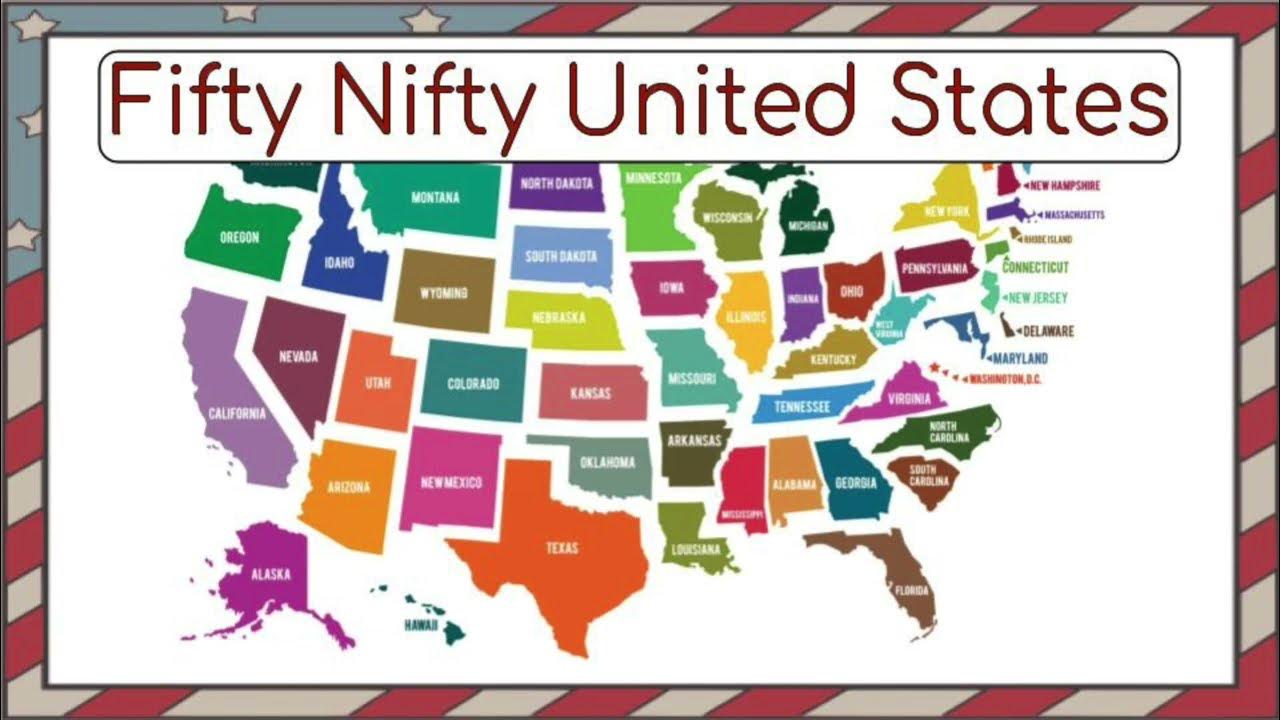
"The Fifty Nifty United States" emerged as a cultural and pedagogical phenomenon during the post-World War II era, a period marked by rapid educational reforms, Cold War anxieties, and a growing emphasis on national unity through standardized learning. Composed by Frank C. Smith in the 1950s, the song was designed as a mnemonic device to help students memorize the 50 U.S. states and their capitals, capitalizing on the era’s fascination with catchy, repetitive learning tools. Its creation coincided with the GI Bill (1944), which expanded access to higher education, and the National Defense Education Act (1958), which prioritized science, math, and geography in school curricula. The song’s timing also aligned with the rise of television, which transformed classroom teaching methods by introducing visual and auditory aids.
The song’s educational significance lies in its ability to simplify complex geographical data into an engaging, rhythmic format, making it particularly effective for younger learners. Unlike traditional rote memorization, "Fifty Nifty" leveraged musical repetition, regional grouping, and cultural nostalgia to reinforce geographical knowledge. Its structure—grouping states by shared characteristics—reflected both practical teaching needs and the era’s ideological emphasis on unity amid Cold War tensions.

Origins and the Cold War Context
Frank C. Smith, a music educator from California, crafted "The Fifty Nifty United States" as part of a broader trend in mid-20th-century educational music, which included songs like "The Alphabet Song" and "Schoolhouse Rock." The song’s creation was influenced by: - Post-war patriotism, as the U.S. sought to reinforce national identity amid global conflicts. - Standardized testing movements, which required students to demonstrate knowledge of state capitals and geography. - The rise of mass media, including records and early television programs, which disseminated educational content widely.
Smith’s original version (recorded in 1959) featured a major-key melody with a brisk tempo, designed to be easy to sing along to while embedding geographical facts. The lyrics grouped states by geographical proximity and cultural similarities, a strategy that differed from earlier mnemonic tools, which often relied on alphabetical or random ordering.
"From the mountains of New York to the shores of California, we're fifty nifty United States!"
This opening line encapsulates the song’s dual purpose: celebrating national diversity while unifying it under a shared identity. The Cold War context added urgency, as educators sought to counter Soviet educational superiority by making American geography memorable, patriotic, and fun.
Regional Groupings and Their Rationale
The song’s lyrics divide the U.S. into 10 regions, each introduced with a rhythmic hook that highlights shared traits. Below is a breakdown of the groupings, compared to modern U.S. Census Bureau divisions (2023):
| Song’s Regional Groupings | Modern Census Bureau Divisions | Key Similarities/Differences |
|---|---|---|
| New York, New Jersey, Pennsylvania | Northeast (partial) | Includes Pennsylvania (Mid-Atlantic) but excludes New England states. Reflects industrial Northeast focus. |
| Ohio, Michigan, Indiana, Illinois | Midwest (Great Lakes) | Aligns closely with the Great Lakes states, emphasizing manufacturing hubs. |
| Wisconsin, Minnesota, Iowa, Kansas | Midwest (North Central) | Adds Iowa/Kansas (historically tied to agriculture) but skips Nebraska/South Dakota. |
| Nebraska, Oklahoma, Texas | South (partial), West (partial) | Groups Southern Plains with Texas, reflecting oil/agricultural economies. |
| South Carolina, Georgia, Florida | South (Southeast) | Focuses on Southern states with warm climates and tourism ties. |
| Kentucky, Tennessee, Mississippi | South (East South Central) | Highlights Appalachian and Deep South cultural/historical links. |
| Louisiana, Arkansas, Missouri | South (partial), Midwest (partial) | Blends Southern and Midwestern states, reflecting river-based trade routes (Mississippi/Missouri). |
| North Dakota, South Dakota, Wyoming | West (Northern Plains) | Emphasizes Great Plains states, often overlooked in early education materials. |
| Colorado, New Mexico, Utah, Arizona | West (Mountain) | Groups Southwestern states, reflecting Spanish/Mexican cultural influences. |
| California, Oregon, Washington | West (Pacific) | Focuses on West Coast states, aligning with post-war economic growth (tech/agriculture). |
| Alaska, Hawaii | West (non-contiguous) | Added later (post-1959) to reflect statehood gains (Alaska: 1959, Hawaii: 1960). |
Discrepancies arise from the song’s 1950s perspective, which prioritized: - Economic regions (e.g., industrial Midwest, agricultural South). - Cultural homogeneity (e.g., grouping Southern states by climate rather than modern divisions like the Deep South or New South). - Omissions (e.g., Vermont, Maine, and Rhode Island are absent, likely due to brevity constraints).
Early Educational Materials and Design
The song’s popularity spurred a wave of complementary teaching materials, including: - Record albums: Early versions featured visual maps on album covers, with lyrics printed on the back. Example: 1960 Capitol Records release included a fold-out U.S. map with state capitals labeled. - Flashcards: Companies like Golden Books produced illustrated flashcards pairing each state with a simple drawing (e.g., Mount Rushmore for South Dakota, Hollywood for California). Cards often included rhyming clues tied to the song’s lyrics. - Textbook inserts: Publishers like McGraw-Hill incorporated the song into geography workbooks, with exercises like "Match the state to its group in the song." - TV adaptations: Programs like "Schoolhouse Rock" (1973) later adapted the song’s format, using animation to reinforce its lessons.
Design trends in these materials reflected 1950s–60s aesthetics: - Bold, primary colors for maps (red for states, blue for capitals). - Cartoonish illustrations to appeal to elementary students. - Repetitive layouts to mirror the song’s structure (e.g., grouping states in columns).
Comparison with Other Geographical Mnemonics
"The Fifty Nifty United States" stood out from earlier mnemonic tools due to its regional grouping strategy, which differed from: - "The Alphabet Song for States": Used alphabetical order (e.g., "A is for Alaska, B is for Boston"), which lacked geographical coherence. - State capital lists: Often presented as dry, linear recitations (e.g., "Montgomery, Alabama; Juneau, Alaska"), failing to engage auditory learners. - Map-based quizzes: Relied on visual memory, which was less effective for students with spatial learning challenges.
Why "Fifty Nifty" Succeeded: - Musical memorability: The major key (G major) and 4/4 time signature created an upbeat, singable rhythm. - Cultural relevance: The song’s patriotic tone resonated with post-war American identity. - Scalability: Teachers could shorten or extend verses based on grade level (e.g., Kindergarten might learn only the first 5 states).
Preserving Regional Identities and 1950s–60s Cultural Climate
The song’s regional groupings reflected 1950s America’s: - Economic priorities: Highlighting industrial states (Ohio, Michigan) and agricultural hubs (Iowa, Kansas) aligned with post-war prosperity narratives. - Cultural homogenization: Oversimplifying diversity (e.g., grouping Louisiana’s French heritage with Missouri’s Midwestern identity) mirrored the era’s melting pot ideology. - Political messaging: The Cold War’s "us vs. them" narrative made songs like "Fifty Nifty" tools to reinforce American exceptionalism in classrooms.
Regional identities preserved included: - Southern pride: States like Georgia and Florida were grouped separately, emphasizing their tourism and warm climates. - Western expansion myths: California, Oregon, and Washington were framed as frontier states, tying to Manifest Destiny themes. - Rural vs. urban divides: The Great Plains states (Nebraska,
Cultural Impact and Modern Relevance of "The Fifty Nifty United States"
"The Fifty Nifty United States" transcends its origins as a simple educational tool to become a cornerstone of American cultural identity, embedding itself deeply into media, social movements, and generational consciousness. Originally crafted to teach geography, the song evolved into a symbol of national unity, regional pride, and even political discourse. Its presence in television, film, and digital platforms has cemented its status as a cultural phenomenon, while adaptations across generations reveal shifting perceptions of patriotism, education, and representation. From its early days in classrooms to viral TikTok trends and collaborations with contemporary artists, the song’s relevance persists, reflecting both the enduring power of music in education and its ability to adapt to modern societal changes.
The song’s cultural footprint extends far beyond its educational purpose, influencing pop culture, political narratives, and even technological innovation. Its appearances in animated series, parodies, and celebrity covers demonstrate its versatility, while debates over outdated lyrics and regional biases highlight ongoing discussions about inclusivity in American identity. Despite controversies, "The Fifty Nifty United States" remains a unifying force, adapted continuously to resonate with new audiences while retaining its core message of national cohesion.
Presence in Media and Pop Culture
"The Fifty Nifty United States" has achieved iconic status through its appearances in television, film, and commercials, often repurposed for humor, nostalgia, or patriotic messaging. One of its most enduring legacies is its inclusion in Schoolhouse Rock!, the 1970s educational animated series that used music and animation to teach subjects like grammar, science, and history. The song’s segment, featuring a train journey through the U.S., became a staple of the show and introduced it to generations of viewers. Beyond Schoolhouse Rock!, the song appeared in episodes of SpongeBob SquarePants, where it was parodied in the 2002 episode "The Camping Episode" to teach geography in a whimsical, underwater setting. This adaptation reinforced the song’s accessibility, blending educational value with entertainment.
In live-action media, the song has been featured in films and TV shows to evoke nostalgia or emphasize themes of unity. For example, the 2004 film School of Rock used a modified version of the song to underscore the film’s message of breaking down barriers and fostering collaboration. Commercials have also leveraged the song’s familiarity, such as a 2016 Super Bowl ad for T-Mobile that repurposed the melody to highlight the company’s nationwide coverage. These appearances underscore the song’s ability to transcend its original context, serving as a cultural shorthand for American identity.
Pop Culture Parodies and Remixes
The song’s simplicity and catchy melody have made it a prime candidate for parodies, remixes, and creative reinterpretations across decades. One of the most notable parodies appeared in The Simpsons episode "Bart Gets an Elephant" (1993), where the song was reworked to mock the absurdity of Springfield’s political landscape. The episode’s version, sung by Lisa Simpson, replaced state names with satirical references, such as "New York, New York, it’s a helluva town" becoming "Springfield, Springfield, it’s a helluva town (but we don’t have a subway)." This parody reflected the song’s malleability, allowing it to critique societal issues while retaining its recognizable structure.
In the digital age, remixes and viral adaptations have further expanded the song’s reach. On platforms like TikTok and YouTube, users have created challenges, dance routines, and lip-sync videos set to the melody, often incorporating modern trends or humor. For instance, a 2020 TikTok trend involved users singing the song while pointing to a map of the U.S., with some adding comedic twists, such as replacing state names with pop culture references (e.g., "California, here we come!" becoming "Disneyland, here we come!"). These adaptations highlight the song’s enduring appeal as a tool for creativity and engagement, particularly among younger audiences.
Symbol of Unity and Regional Pride
"The Fifty Nifty United States" has long served as a musical embodiment of American unity, often invoked during national crises, celebrations, or moments of collective reflection. During the aftermath of the September 11 attacks in 2001, the song resurfaced in media as a symbol of resilience and national pride. News broadcasts and public service announcements occasionally used excerpts of the song to underscore messages of solidarity, reflecting its ability to evoke a sense of shared identity. Similarly, during the COVID-19 pandemic, educators and parents turned to the song as a way to instill a sense of continuity and normalcy in disrupted learning environments.
Regionally, the song has fostered pride among Americans, particularly in states that are often overshadowed in broader narratives. For example, Alaska and Hawaii, which were added to the song after their statehood in 1959, became focal points of pride for their residents. The inclusion of these states in the song’s lyrics—"Alaska, fifty-ninth, the last frontier" and "Hawaii, fifty, the Aloha State"—reinforced their significance in the national consciousness. During statehood anniversaries or tourism campaigns, local governments and media outlets have referenced the song to highlight regional distinctiveness, such as Alaska’s vast wilderness or Hawaii’s cultural heritage.
Generational Perceptions and Nostalgia
The reception of "The Fifty Nifty United States" varies significantly across generations, reflecting broader cultural shifts in how patriotism and education are perceived. For Baby Boomers and Gen X, the song is often tied to childhood memories of school assemblies, field trips, and the post-World War II emphasis on civic education. Many from these generations recall singing the song in unison, fostering a sense of collective experience and national belonging. Nostalgia for the song is particularly strong among educators and parents who grew up with it, often citing it as a tool that made geography engaging and memorable.
In contrast, Millennials and Gen Z engage with the song through digital and pop culture lenses, often encountering it first through parodies, TikTok trends, or references in modern media. While some younger audiences appreciate the song’s historical significance, others critique its outdated lyrics or lack of representation for territories like Puerto Rico or Washington, D.C. (which is not a state). However, the song’s adaptability has allowed it to retain relevance; for example, Gen Z creators have used the melody to address contemporary issues, such as climate change or social justice, by reimagining the lyrics to reflect modern concerns. This generational divide highlights the song’s dual role as both a nostalgic artifact and a malleable cultural tool.
Notable Performances and Celebrity Covers
The song’s cultural impact is further evident in its performances by celebrities, musicians, and influencers, who have reinterpreted it for various audiences. Below is a table listing notable covers, performances, or appearances, along with their contexts:
| Artist/Performer | Year | Context | Notable Details | ||||||||||||||||||||||||||||||||||||||||||||||||||||||||||||||||||||||||||||||||||||||||||||||||||||||||||||||||||||||||||||||||||
|---|---|---|---|---|---|---|---|---|---|---|---|---|---|---|---|---|---|---|---|---|---|---|---|---|---|---|---|---|---|---|---|---|---|---|---|---|---|---|---|---|---|---|---|---|---|---|---|---|---|---|---|---|---|---|---|---|---|---|---|---|---|---|---|---|---|---|---|---|---|---|---|---|---|---|---|---|---|---|---|---|---|---|---|---|---|---|---|---|---|---|---|---|---|---|---|---|---|---|---|---|---|---|---|---|---|---|---|---|---|---|---|---|---|---|---|---|---|---|---|---|---|---|---|---|---|---|---|---|---|---|---|---|---|
| Schoolhouse Rock! | 1973 | Educational Animated Series | Featured in the "America Rock" segment, using a train metaphor to teach state geography. Became a defining element of the series. | ||||||||||||||||||||||||||||||||||||||||||||||||||||||||||||||||||||||||||||||||||||||||||||||||||||||||||||||||||||||||||||||||||
| Lisa Simpson | 1993 | Parody in The Simpsons ("Bart Gets an Elephant") | Satirical version mocking Springfield’s political dynamics, replacing state names with local references. | ||||||||||||||||||||||||||||||||||||||||||||||||||||||||||||||||||||||||||||||||||||||||||||||||||||||||||||||||||||||||||||||||||
| Weird Al Yankovic | 2003 | Comedy Album (Poodle Hat) | Parodied the song as "The Fifty Nifty United States (But Mostly the West)", highlighting regional biases in the original lyrics. | ||||||||||||||||||||||||||||||||||||||||||||||||||||||||||||||||||||||||||||||||||||||||||||||||||||||||||||||||||||||||||||||||||
| SpongeBob SquarePants Cast | 2002 | Episode "The Camping Episode" | Underwater-themed parody teaching geography with Bikini Bottom references (e.g., "Texas, it’s big!" becoming "Jellyfish Fields, they’re jiggly!"). | ||||||||||||||||||||||||||||||||||||||||||||||||||||||||||||||||||||||||||||||||||||||||||||||||||||||||||||||||||||||||||||||||||
| Jack Black | 2016 | Live Performance at The Tonight Show Starring Jimmy Fallon | Energetic, comedic rendition with exaggerated gestures, emphasizing the song’s playful nature. | ||||||||||||||||||||||||||||||||||||||||||||||||||||||||||||||||||||||||||||||||||||||||||||||||||||||||||||||||||||||||||||||||||
T
Lyrics Deep Dive: Regional Groupings and Their Meanings in "The Fifty Nifty United States""The Fifty Nifty United States" serves as more than just a mnemonic tool for memorizing state names—it encapsulates a snapshot of mid-20th-century America, blending regional geography, historical precedence, and patriotic sentiment. The song’s lyrics, written by Marianna Simms in 1958, were designed to group states by shared characteristics such as admission dates, geographic proximity, or cultural significance, reflecting the educational priorities of the post-WWII era. These groupings were not arbitrary but rooted in the political and economic landscape of the 1950s–60s, where states like California (admitted in 1850) and Alaska/Hawaii (1959) symbolized both westward expansion and Cold War-era territorial growth. The song’s structure also prioritizes memorability through rhyme and alliteration, a deliberate choice to engage young learners in a time when geography education emphasized national unity and regional identity.Original Lyrics vs. Modern Adaptations: Tracking Changes and OmissionsMarianna Simms’ original lyrics for "The Fifty Nifty United States" differed subtly from the versions widely taught today, reflecting adjustments in educational priorities and cultural sensitivities. The earliest recorded version grouped states by admission to the Union in chronological order, beginning with the original 13 colonies and progressing to the newest additions (Alaska and Hawaii). However, modern adaptations often rearrange verses for rhythmic flow or exclude less familiar states to simplify memorization for younger audiences. Key Differences:Regional Groupings in the Lyrics: Historical and Geographical LogicThe song’s verses are organized into five broad regional clusters, each reflecting a mix of historical significance, economic importance, and educational accessibility. Below is a line-by-line breakdown of the most common modern version, mapped to U.S. Census Bureau regions with explanations for their groupings:
Rhyme and Rhythm: The Art of MemorabilityThe song’s anapestic meter (two unstressed syllables followed by a stressed one, e.g., "Al-a-ba-ma") mimics the rhythm of a galloping horse, evoking frontier imagery and reinforcing its educational purpose. Simms employed alliteration, assonance, and internal rhymes to create auditory hooks:Teaching Methods and Activities Using "The Fifty Nifty United States""The Fifty Nifty United States" song transcends its nostalgic appeal to become a dynamic educational tool, bridging geography, history, and cultural studies. Its repetitive structure and regional groupings make it ideal for interactive learning, fostering memorization, creativity, and collaboration. By leveraging the song’s familiarity, educators can design activities that engage students across grade levels, from kindergarten to high school, while aligning with curriculum standards in social studies, language arts, and multimedia literacy.Creative Verse Composition: Modernizing the Song for Contemporary States and TerritoriesStudents can expand the song’s legacy by composing original verses for modern states (e.g., Alaska, Hawaii) or U.S. territories (e.g., Puerto Rico, Guam). This activity develops research skills, poetic license, and an understanding of territorial governance. Begin by dividing students into small groups, each assigned a state or territory not originally included in the 1960s version. Provide guidelines:Lesson Plan: Tracing U.S. History Through State Admissions and Cultural ContributionsThe song’s chronological order of states provides a scaffold for teaching U.S. expansion, conflicts, and cultural milestones. Structure a 5-day unit with daily themes: 1. Geographic Expansion: Map state admissions from the original 13 colonies to Alaska/Hawaii (1959), highlighting treaties (e.g., Louisiana Purchase, 1803) or wars (e.g., Mexican-American War, 1848). 2. Cultural Landmarks: Assign each student a state to research, focusing on contributions like jazz in New Orleans, the Gold Rush in California, or Native American heritage in Arizona (e.g., Hopi pueblos). 3. Key Events: Use a timeline to plot events tied to statehood, such as the Underground Railroad in Ohio or the 1965 Voting Rights Act’s impact on Southern states. 4. Debates and Movements: Discuss controversies like Hawaii’s annexation (1898) or the debate over statehood for D.C. and Puerto Rico. 5. Creative Synthesis: Students write a newspaper article or TED Talk script summarizing their state’s role in U.S. history, using evidence from research. Tools: Integrate primary sources (e.g., Lewis and Clark journals, statehood documents) and multimedia (e.g., PBS documentaries on westward expansion).Interactive Quiz Game: "Name That State" Using Song Lyrics and Historical FactsTransform the song into a virtual or in-class quiz game combining geography, history, and pop culture. Design a Jeopardy-style board with categories:Multimedia Projects: Mapping the Song Through Video, Podcasts, and Digital ToolsStudents can repurpose the song into interactive multimedia projects using free tools like Canva, Google Earth, or Audacity. Propose three project types: 1. Animated Music Video:Collaborative Research Project: Deep Dive into State Cultural SignificanceAssign groups a state from the song to investigate its cultural identity, focusing on:Grade-Level Learning Objectives for "The Fifty Nifty United States"Adapt the song’s themes to meet Common Core and Next Generation Science Standards (NGSS) across grade levels. Below is a comparative table outlining objectives, activities, and assessments:
Lyrical Devices and RelatabilityThe lyrics employ poetic devices to transform abstract geographical data into vivid, memorable imagery. Key techniques include:Instrumentation and Adaptive ArrangementsThe song’s adaptability extends to non-traditional instruments, making it versatile for classrooms or performances. Below are instrument-specific arrangements that preserve its educational core:Harmonic Analysis and Chord ChartsThe song’s harmonies rely on diatonic chords (derived from the C major scale), ensuring familiarity and ease of play. Below is a chord chart for a full verse and chorus:
Cultural Adaptations and Translations"The Fifty Nifty United States" has been adapted globally, including:Visual and Multimedia Representations of "The Fifty Nifty United States""The Fifty Nifty United States" transcends its musical roots as a pedagogical tool by offering rich opportunities for visual and multimedia exploration. From vintage educational illustrations to modern digital animations, the song’s lyrics have inspired diverse artistic interpretations that enhance geographical literacy and cultural engagement. These representations leverage storytelling, interactivity, and data visualization to make abstract geographical knowledge tangible, accessible, and memorable. Whether through static infographics, dynamic motion graphics, or immersive augmented reality (AR) experiences, the song’s adaptability ensures its continued relevance in both educational and entertainment contexts.Vintage Illustrations and Early Educational AnimationsEarly versions of "The Fifty Nifty United States" were often paired with illustrations and animations designed to reinforce geographical learning in classrooms. The 1960s and 1970s saw the rise of schoolhouse cartoons and public television segments, where the song was accompanied by simple, colorful animations depicting each state’s silhouette or a brief visual representation tied to its nickname or landmark. For example:Modern Digital Resources Featuring the SongThe digital age has expanded the ways "The Fifty Nifty United States" can be experienced, with resources tailored to diverse audiences—from elementary students to geography enthusiasts. Below is a table of modern digital tools incorporating the song, categorized by platform and target audience:
Visual Representations of Lyrics: Motion Graphics and Interactive MapsAnimators and designers have creatively translated the song’s lyrics into motion graphics and interactive maps, often using software like Adobe After Effects, Canva, or even simple tools like PowerPoint. Effective designs typically follow these principles:Designing a Modern Infographic Combining Lyrics and Geographical DataCreating an infographic that merges the song’s lyrics with geographical data (e.g., population, climate, economy) involves structured planning and visual hierarchy. Below is a step-by-step guide using Canva or Adobe Illustrator: 1. Data Collection: Gather three key datasets per state:"The Fifty Nifty United States" remains more than a nostalgic relic; it is a dynamic tool that bridges past and present, classrooms and living rooms, and geography lessons with cultural storytelling. Its regional groupings, once crafted to simplify learning, now invite critical discussions on representation and regional identity, while its musical structure proves endlessly adaptable to modern teaching methods. As educators and creators continue to reimagine its legacy—through animations, AR lessons, or student-led parodies—the song’s enduring power lies in its ability to turn abstract knowledge into something memorable, patriotic, and undeniably nifty. |
Leave a Comment
Comments are moderated before appearing. The data you submit is processed according to the Privacy Policy of Vetlife Archive.